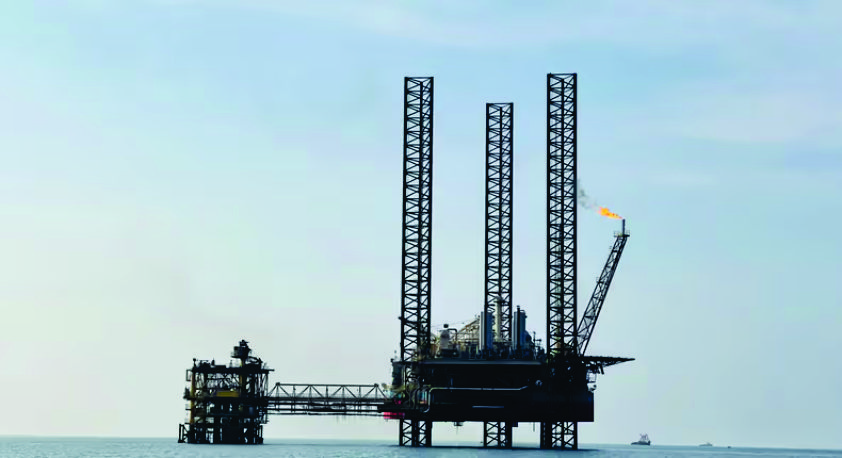
The energy giant said that a substantial oil-bearing reservoir was found in its Merlin-1X exploration well, which is part of Petroleum Exploration License 39 (PEL 39).
It claims that the well produced some of the most promising geological data seen in the licensing area to date, including the existence of light crude oil and high-quality reservoir features.
The finding is the eighth well drilled within PEL 39, adding to a growing number of successful discoveries that have turned Namibia from a relatively unknown exploration market into one of Africa’s most keenly watched energy hotspots.
“We are pleased with this discovery, which follows three earlier discovery announcements in Namibia,” QatarEnergy CEO and Energy Minister Saad Sherida Al-Kaabi said.
The discovery was achieved through a strategic partnership between Namibia’s national oil corporation and Shell.
QatarEnergy continues to consolidate a significant operational footprint within the country, maintaining interests in four offshore exploration licenses.
Beyond its participation in PEL 56, PEL 91, and PEL 90, the corporation retains a 45% stake in PEL 39, providing it with exposure to approximately 34,000 square kilometers of offshore territory.
Over the last several years, large multinational oil corporations have increased their exploration activity along Namibia’s coastline, notably in the Orange basin.
The spike in interest began after a series of offshore discoveries revealed that the country potentially has significant hydrocarbon reserves capable of supporting a future oil-producing sector.
Namibia’s oil exploration in recent years
In 2023, Namibia’s state-owned National Petroleum Corporation (NAMCOR) reported the finding of light oil around 270 kilometers offshore.
Momentum continued in 2024, with industry behemoths such as TotalEnergies and Shell reporting finds estimated at 2.6 billion barrels of oil resources, raising hopes that commercial production may begin before the end of the decade.
The country’s expanding energy potential has sparked a surge of international investment.
Italy’s Eni joined the Orange Basin in collaboration with BP and Rhino Resources, while British energy company BP recently acquired holdings in exploration licenses in the Walvis Basin, another very potential location.
Although not all discoveries have proven financially viable, investor interest remains high.
Shell, for example, took a significant write-down on one of its Namibian finds after realizing the project would be difficult to execute economically.
Source: africabusinessinsider