G7 leaders recently agreed to intensify coordination to reduce reliance on China for rare earths and permanent magnets to below 60% by 2030, with an eventual target of 50%.
The plan includes joint stockpiling mechanisms, expanded recycling capacity, and a new policy platform supported by the International Energy Agency to monitor supply risks and coordinate crisis response.
The strategy reflects growing concern among Western economies over China’s dominance in critical mineral processing, particularly rare earths, where it accounts for about 90% of global output in key segments such as magnets used in electric vehicles, defence systems, and advanced electronics.
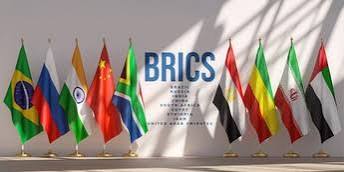
It is against this backdrop that China is strengthening its alignment with BRICS, positioning the grouping as a strategic counterweight to Western-led efforts to restructure global supply chains without it.
Speaking at the 16th Meeting of BRICS National Security Advisors and High Representatives on National Security, Chinese Foreign Affairs chief Wang Yi said Beijing stands ready to deepen cooperation on strategic minerals, energy security, and global governance reform.
Wang said BRICS cooperation has matured over two decades into a key pillar of global governance and called for stronger coordination on multilateralism, supply chain resilience, and opposition to unilateral and protectionist measures.
He also urged deeper collaboration on strategic minerals, alongside emerging risks linked to artificial intelligence and digital governance, framing BRICS as a platform capable of delivering more balanced global outcomes.
Why this matters in the G7-China minerals race
The G7 push to reduce reliance on China is not occurring in isolation — it is triggering a parallel realignment in which Beijing is strengthening its coordination with BRICS economies that sit at different points of the global critical minerals value chain.
While Western economies focus on diversifying away from China’s dominance in processing and refining, Beijing’s advantage lies in the fact that it is not solely dependent on domestic resources. Instead, it is embedded across multiple BRICS supply nodes that collectively shape global availability of strategic minerals.
In the Democratic Republic of the Congo and Zambia, Chinese firms are heavily involved in cobalt and copper extraction, while in Zimbabwe and parts of southern Africa, they are expanding exposure to lithium and manganese assets critical for battery production.
Beyond Africa, BRICS partners also strengthen China’s strategic position. Brazil is a major global supplier of niobium and rare earth-linked minerals, as well as a growing source of lithium and nickel exploration projects.
Russia remains a key producer of nickel, palladium, and other strategic inputs linked to defence and industrial manufacturing. Meanwhile, India plays a growing role in mineral demand, refining ambitions, and downstream manufacturing, even as it expands its own sourcing diversification strategy.
Source: Africabusinessinsider