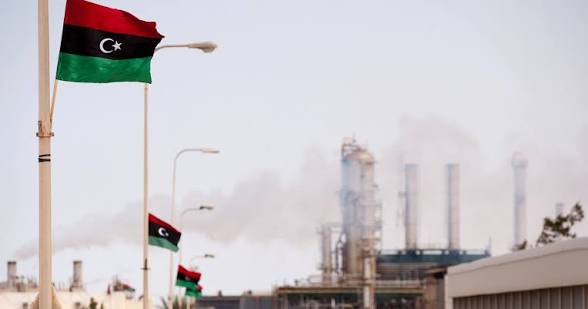
The National Oil Corporation (NOC) announced that the Essar oil discovery in the prolific Sirte Basin has successfully completed its technical and economic evaluation, paving the way for development and eventual production.
According to the NOC, the discovery was confirmed following the drilling of well B1-106/4 and the completion of an evaluation of OMV’s development plan.
The field is estimated to contain 195 million barrels of recoverable oil from the upper and lower Sabil reservoirs and is expected to produce around 5,000 barrels per day (bpd) once brought online.
Development of the project will be led by Zueitina Oil Operations Company, with production expected to begin as quickly as possible due to the field’s proximity to existing oil infrastructure.
Libya ramps up oil ambitions
The approval comes as Libya seeks to restore its position as one of Africa’s leading oil producers after more than a decade of conflict disrupted exploration, investment and production.
Home to Africa’s largest proven crude oil reserves, estimated at about 48 billion barrels, Libya has intensified efforts to attract international investors back into its energy sector.
Last year, the country launched its first oil and gas licensing round in nearly two decades, ending an 18-year hiatus in upstream exploration bidding.
The previous licensing round was held in 2007, four years before the overthrow of former leader Muammar Gaddafi in 2011, an event that plunged the country into years of political instability and armed conflict.
Momentum has continued to build this year. Last month, Libya’s NOC signed exploration and production-sharing agreements with a group of international energy companies, including Spain’s Repsol, Türkiye’s Turkish Petroleum, Italy’s Eni, QatarEnergy, and Hungary’s MOL, following the successful conclusion of the 2025 licensing round.
The commercial approval of the Essar discovery further strengthens Libya’s strategy of partnering with global energy firms to unlock new reserves and increase output.
The country is currently producing around 1.4 million barrels of oil per day, its highest level in more than a decade. Authorities are targeting 1.6 million bpd by the end of the year and ultimately aim to raise production to 2 million bpd, a goal that will depend heavily on bringing new discoveries such as Essar into commercial production.
Source: Africabusinessinsider